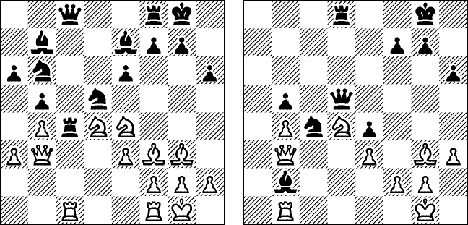
 Game Seven: Capablanca-Alekhine, Buenos Aires 1927 "Chess, like love, like music, has the power to makemen happy."Alexander Alexandrovich Alekhine's miserable life was best summed up bythe eminent Austrian Chess analyst Franz Michael Kraelor: "Had Alekhinerestricted his pervasive megalomania and vile hatred of humanity to theconfines of the chess board, he would certainly be remembered as one ofthe greatest chess players of all times instead of perhaps the most despicable."Alekhine, who played or studied Chess "eight hours a day on principle,"was almost the polar opposite of the Cuban José Raúl Capablancay Graupera. Capablanca couldn't be bothered with studying; his brilliantplay was almost intuitive. In the end, Alekhine's maniacal obsession triumphedover Capablanca's imperturbable demeanor; he won this intricate game whenCapablanca resigned on the 33rd move. After winning the world championship+6=25 -3, though, Alekhine never honored promises for a return match againstCapablanca. Alekhine was ultimately disgraced by his collaboration withthe Nazis who published his shrill anti-Semitic articles, and his heavydrinking and smoking led to cirrhosis of the liver, duodenitis, and hardeningof the arteries. Alekhine died friendless and penniless from a heart attackon 24 March 1946. |
| (PREVIOUS) |