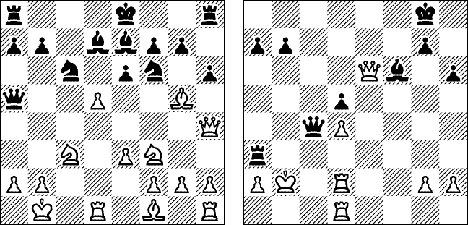
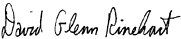
 Game Six: Pillsbury-Lasker, St. Petersburg 1896 "Lovely chess moves and lovely melodies (and lovelytheorems in mathematics, etc.) have this in common: every one has idiosyncraticnuances that seem logical a posteriori but that are not easy to anticipatea priori."Emanuel Lasker, on the mend from a devastating case of typhoid fever, wasn'texpected to triumph against the American wünderkind Harry Pillsbury.In the middle of the tournament, however, Pillsbury's morale was shatteredby the news that he had contracted syphilis. Deeply shaken, Pillsbury prematurelydeveloped his queen, a tactical error that Lasker exploited with characteristicbrilliance by sacrificing a rook. This well-played--and indeed brilliant--strategythat eventually lead to Pillsbury's resignation on the 29th move. Pillsburywas a tragic example of Cyril Connolly's observation "Whom the godswish to destroy they first call promising." After what the EveningBulletin referred to as "a period of temporary insanity" Pillsburytried to commit suicide by jumping from the fourth floor of the PhiladelphiaPresbyterian Hospital in 1904. He didn't have long to suffer, however, forhis short, brilliant life ended when he died at age 33 from general paresisof the insane on 17 June 1906. |
| (PREVIOUS) | (NEXT) |